Unauthorized Utilities Installation: Cassation Court Clarifies the Boundary Between Redevelopment and Reorganization
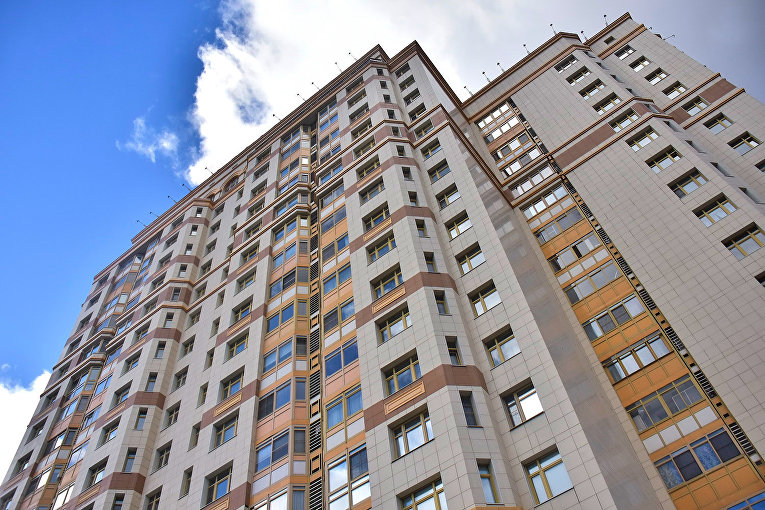
In a significant ruling for the real estate and development sector, the Fourth Cassation Court of General Jurisdiction has upheld the necessity of restoring non-residential premises to their original technical specifications, effectively rejecting the legalization of unauthorized structural and engineering modifications in a Krasnodar apartment complex.
From a professional urban planning and legal perspective, this case highlights a critical distinction often overlooked by developers and property owners: the difference between redevelopment (перепланировка) and reorganization/re-equipment (переустройство).
The Legal Distinction: Layout vs. Infrastructure
Under the Housing Code of the Russian Federation, specifically Article 25, these two concepts are treated as distinct legal acts:
1. Redevelopment: Concerns the alteration of boundaries, total area, or the internal layout of a premise (e.g., moving walls or partitions).
2. Reorganization: Involves the installation, replacement, or relocation of engineering networks, including sanitary-technical, electrical, and other utility equipment.
While the owner of 22 non-residential premises (totaling 3,427 sq. m.) argued that the structural integrity of the building remained intact—a point supported by a technical inventory bureau's expertise regarding building codes and fire safety—the court looked beyond mere structural stability. The installation of showers, toilets, and kitchens required tapping into the building's common utility networks.
Risk Analysis: Infringement of Common Property Rights
The core of the court's reasoning lies in the impact on the collective rights of other property owners. The unauthorized connection to communal water and sewage systems constitutes an interference with the shared infrastructure of the multi-apartment building.
According to Part 4 of Article 29 of the Housing Code, a court may only permit the retention of unauthorized works if such works do not violate the rights and legitimate interests of other citizens and do not pose a threat to life or health. In this instance, the court determined that the installation of sanitary facilities without municipal approval directly infringed upon the interests of the broader ownership community.
Procedural Failures and Financial Implications
The owner's failure to seek prior approval or subsequent acceptance from the municipal administration proved fatal to the defense. The judicial trajectory of this case serves as a stern warning for commercial tenants and owners in mixed-use developments:
As a result, the owner is now mandated to restore the premises to their original state, facing a daily penalty of 10,000 rubles for non-compliance. For developers and asset managers, this case reaffirms that technical compliance with building codes is insufficient; strict adherence to municipal administrative procedures and the protection of common property rights are the primary benchmarks for legal stability.